Finding connection, Building communication, Growing together.

Individualized, child-led speech and language therapy that celebrates each child’s strengths and supports meaningful participation in everyday life.
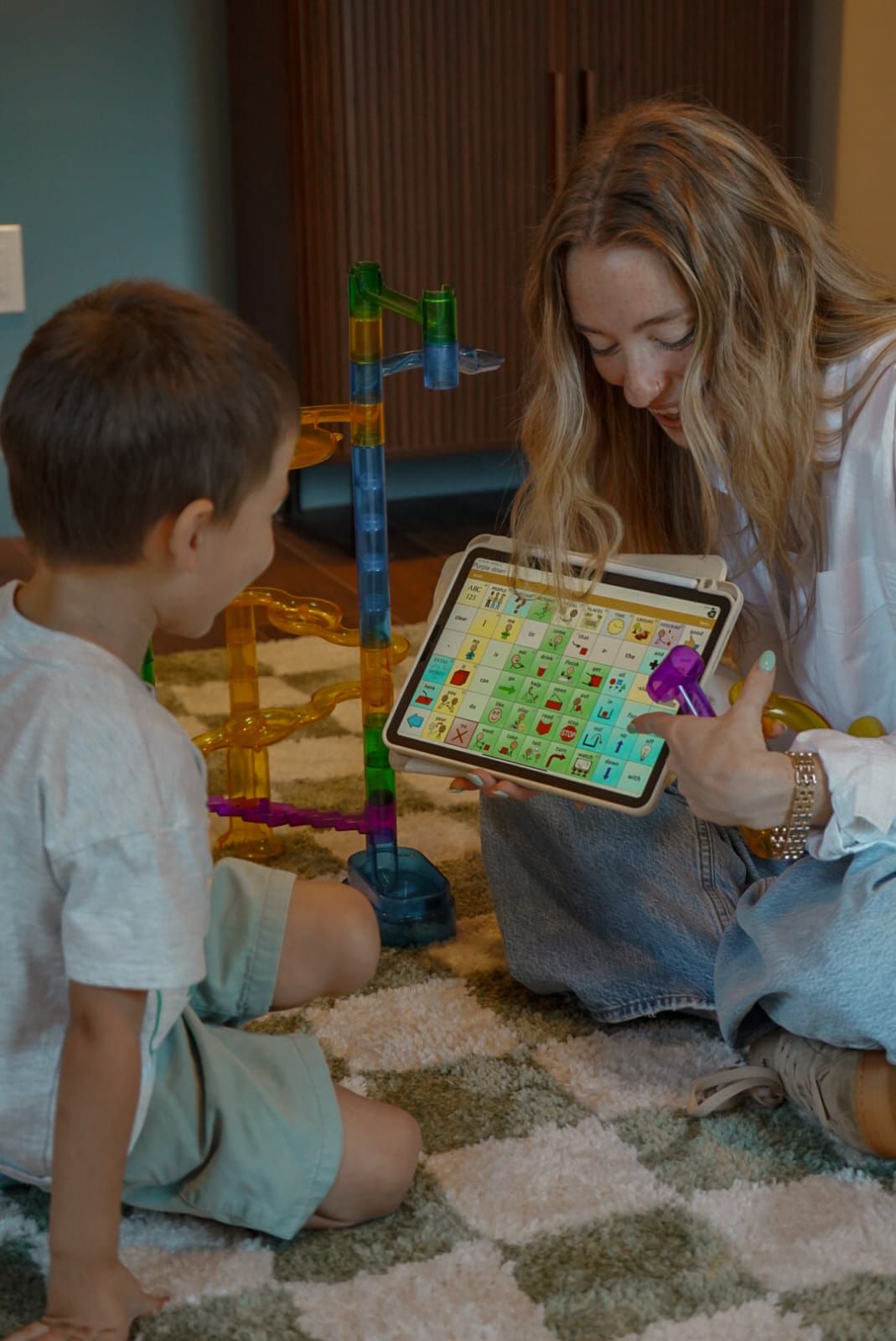
A speech therapist and a young child use a picture-based communication app on a tablet

Our Services

Therapy is tailored to each child’s individual strengths, needs, interests, and communication style. The goal is to create a supportive environment where children can develop their communication skills while feeling understood, respected, and successful. Speech Together works closely with families to support communication that carries beyond the therapy room and into the people, places, and everyday routines that matter most to them.

  • Speech Sound Disorders

    Help your child be more easily understood in everyday conversations with others. Therapy supports the development and production of sounds, building skills for clearer speech in daily life.

  • Early Language Development

    Build the foundations for understanding and self-expression through play and connection with others. Children develop early communication skills and discover how their words and actions can make a difference.

  • Expressive & Receptive Language

    Support your child in understanding what others say and sharing their own thoughts and ideas. Therapy builds skills to help them communicate and make sense of the world.

  • Social Communication

    Help your child connect with others in ways that feel comfortable and meaningful to them. Therapy supports skills for play, friendships, and understanding one another during everyday interactions.

  • Fluency & Stuttering

    Support your child in communicating confidently, including when words repeat, stretch, or feel stuck. Therapy helps them develop a positive relationship with their own speech across everyday situations.

  • Augmentative and Alternative Communication

    Give your child more ways to express themselves alongside natural speech, using devices, pictures, gestures, or signs. These tools support sharing needs, thoughts, and feelings, and connecting with others.

    Consultation coming soon

  • Executive Functioning

    Build skills for planning, organizing, managing attention and impulses, and solving problems in everyday life. These abilities help children navigate the demands of school, play, routines, and daily interactions.

  • Feeding

    Help your child feel more comfortable exploring foods and participating in mealtimes. Therapy addresses sensory and oral-motor challenges while supporting eating skills and a positive relationship with food.

  • Orofacial Myofunctional Therapy

    Support how the mouth, face, and jaw work together in everyday activities. Therapy focuses on muscle movement and resting posture as they relate to breathing, speaking, chewing, and swallowing.

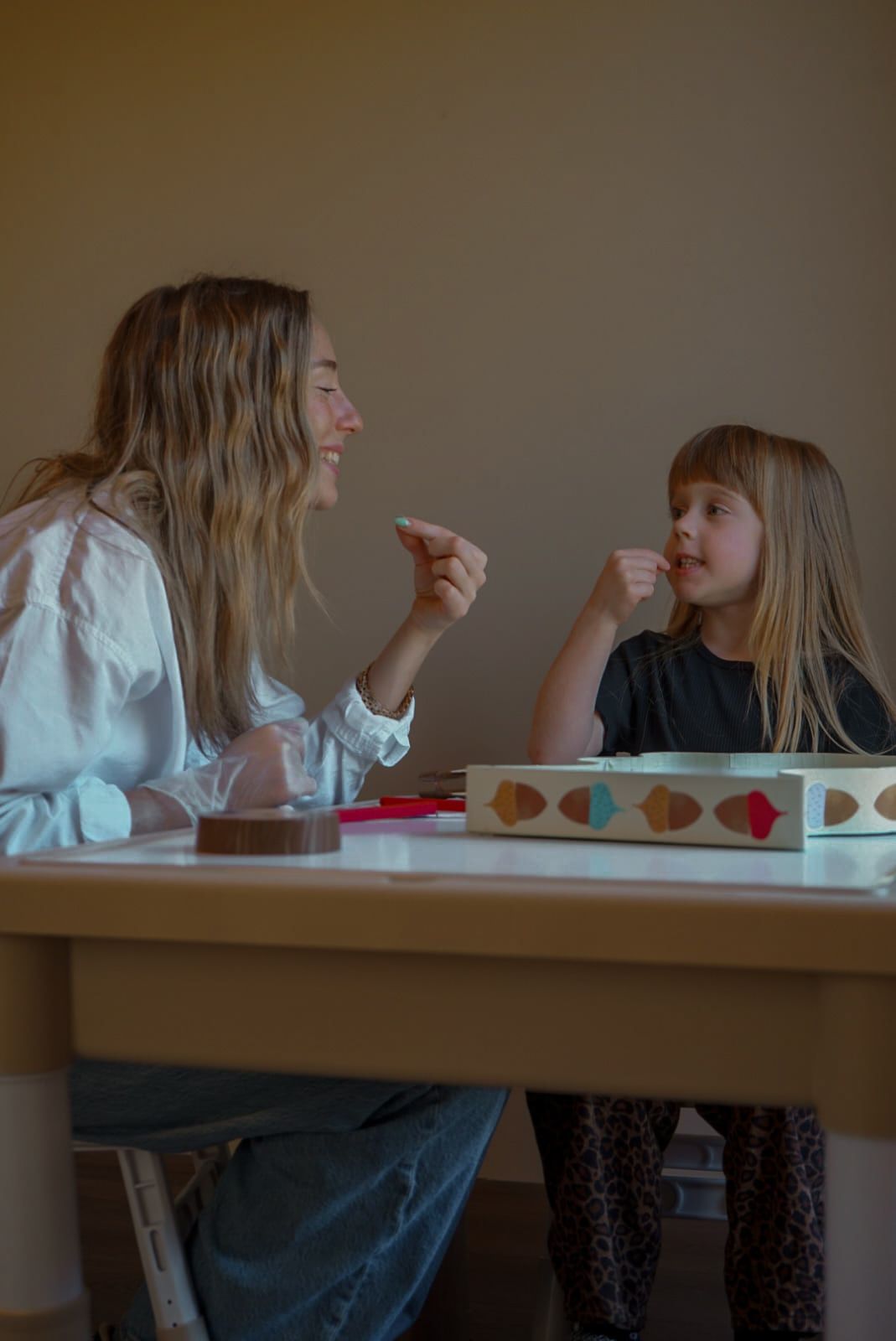
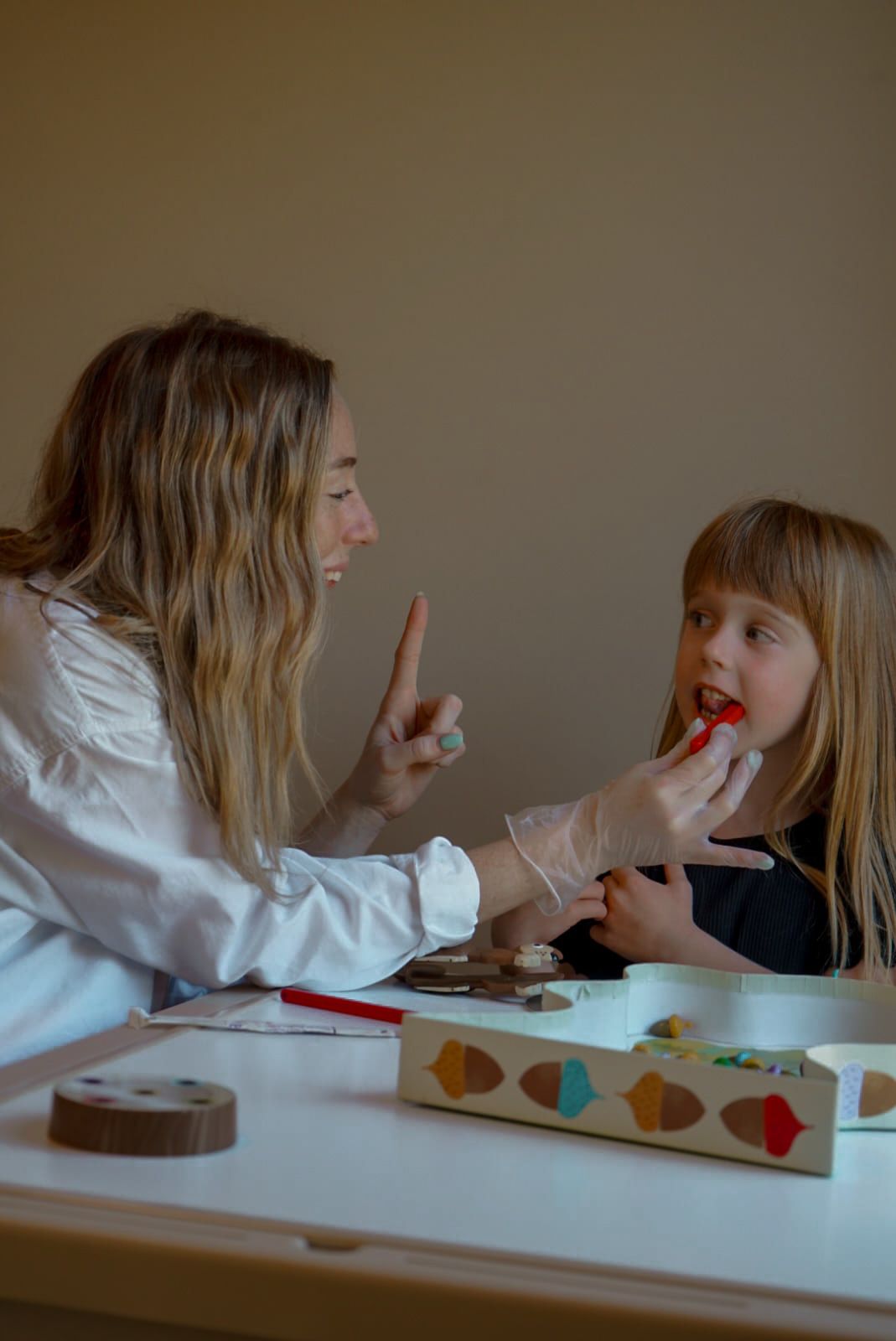
A speech therapist points to her lips to model a sound for a young girl at a therapy table

Speech Sound Disorders

Some children have difficulty producing certain sounds or sound patterns, which can make their speech harder for others to understand. Therapy supports the development and production of speech sounds to help improve overall speech intelligibility.

You may notice:

  • Leaving sounds out of words
  • Substituting one sound for another
  • Having difficulty producing certain sounds clearly
  • Being difficult for unfamiliar listeners to understand
  • Becoming frustrated when others don't understand them
A young boy fits a star piece into a wooden shape puzzle

Early Language Development

Early language development is about building the foundations of language and communication through play and connection. Therapy may focus on helping children understand and express themselves, develop early communication skills, and discover that their communication can have a meaningful impact on the people and world around them.

You may notice:

  • Limited use of words or phrases
  • Difficulty communicating wants, needs, thoughts, or ideas
  • Relying on gestures or other forms of communication
  • Difficulty understanding or following simple directions
  • Difficulty learning and using new words
  • Becoming frustrated when they cannot communicate what they want to say
A young boy smiles at a speech therapist during a therapy session

Expressive & Receptive Language

Language differences can affect how a child understands what others say (receptive language) and/or expresses their own thoughts and ideas (expressive language). Therapy can support children in understanding and using language to communicate in and make sense of the world around them.

You may notice:

  • Difficulty understanding or using grammar
  • Challenges following directions
  • Difficulty answering or understanding questions
  • Trouble finding the words they want to say or putting words together to express an idea
  • Difficulty sequencing events, telling stories, or explaining what happened
  • As well as other areas of expressive and receptive language unique to each child
A speech therapist points to a picture in a book for a young girl

Social Communication

Social communication involves using and understanding communication during interactions with others. Therapy supports children in building skills for play, friendships, and connection in ways that feel comfortable and meaningful to them and the people they are communicating with.

You may notice:

  • Finding it challenging to initiate or sustain interactions with others
  • Wanting to join conversations or interactions but being unsure how to enter or keep them going
  • Missing or misinterpreting parts of another person’s message or communication style
  • Taking language literally or having trouble interpreting sarcasm, idioms, or other nonliteral language
  • Needing support interpreting social context, perspectives, or what others may be thinking or feeling
  • Finding it challenging to navigate different communication styles, expectations, or social settings
A young boy draws with crayons at a table while a speech therapist works beside him

Fluency & Stuttering

Stuttering is a difference in the flow of speech that can include repetitions, prolongations, or moments of getting stuck while trying to speak. Stuttering can vary from person to person and may change depending on the situation, and therapy can support children in communicating confidently while developing a positive relationship with their own speech.

You may notice:

  • Repeating sounds, words, or phrases
  • Stretching out sounds
  • Moments where they get or feel “stuck”
  • Avoid certain words or speaking situations
  • Eye blinking, facial tension, changes in body movement, or other secondary behaviors that may occur during moments of stuttering
A young boy looks down at a tablet as a speech therapist smiles beside him

Augmentative and Alternative Communication

Some children communicate using Augmentative and Alternative Communication (AAC) in addition to natural speech. AAC can include speech-generating devices, communication apps, picture-based systems, communication boards, gestures, signs, and other methods of communication. AAC can support children who have difficulty utilizing natural speech to communicate their wants, needs, thoughts, ideas, feelings, and connections with others.

Children who may benefit from AAC support may:

  • Have difficulty communicating their wants, needs, thoughts, or ideas through speech alone
  • Communicate using a combination of speech, gestures, signs, or other systems
  • Have limited or inconsistent access to spoken language
  • Difficulty being understood by others
  • Need additional support to participate in conversations and express themselves

AAC evaluations and AAC consultation services are coming soon. You can still book a free phone consultation to talk about your child’s needs.

A speech therapist and a young boy work on a clock activity at a table

Executive Functioning

Executive functioning skills help children plan, organize, manage their attention and impulses, solve problems, and navigate everyday tasks. These skills play an important role in helping children manage the demands of school, play, routines, and everyday interactions.

You may notice:

  • Difficulty getting started on tasks
  • Difficulty planning or organizing
  • Trouble remembering or managing multiple steps of a direction/routine
  • Difficulty shifting between activities or changing plans
  • Impulsive responses or difficulty with inhibition
  • Difficulty solving problems independently
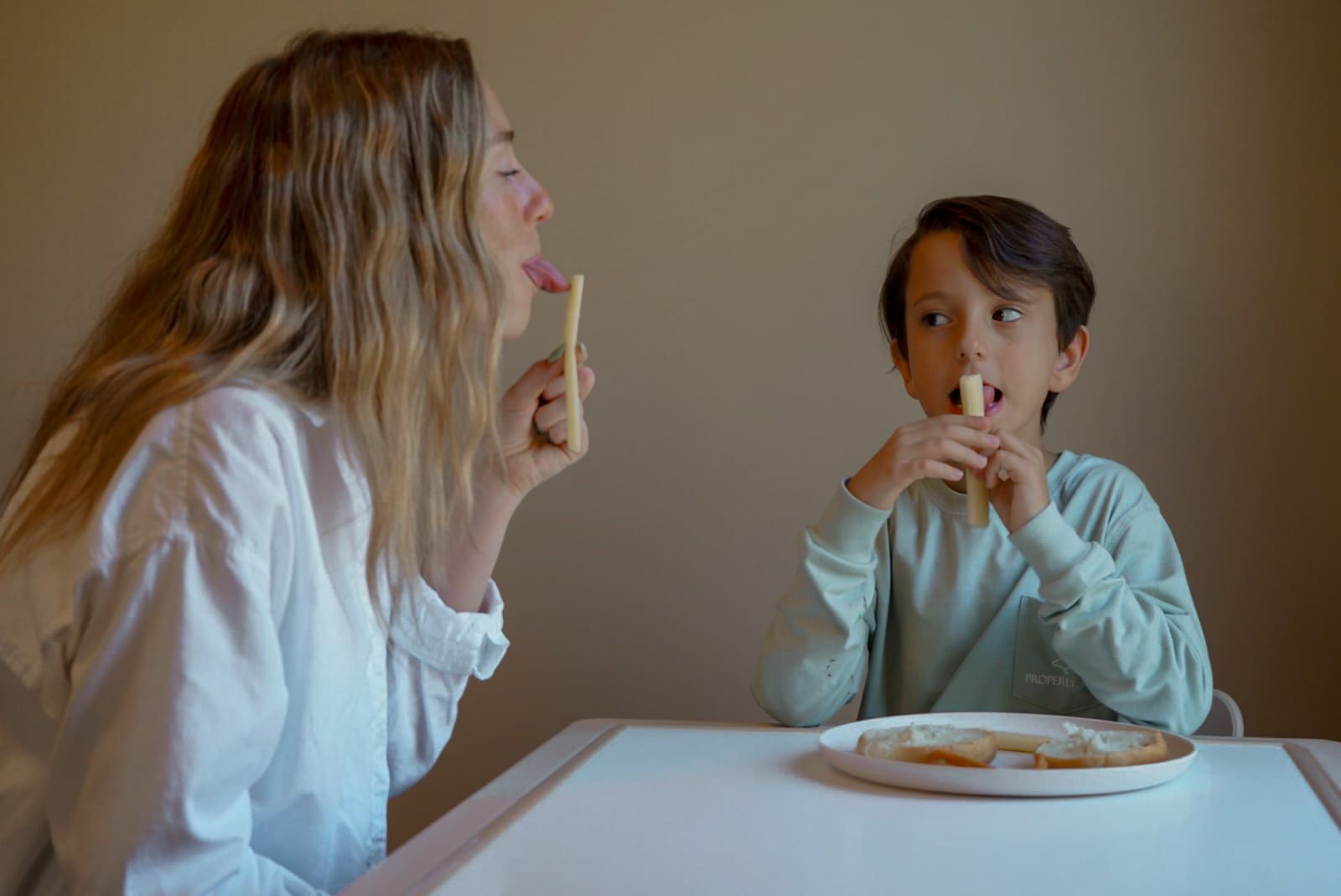
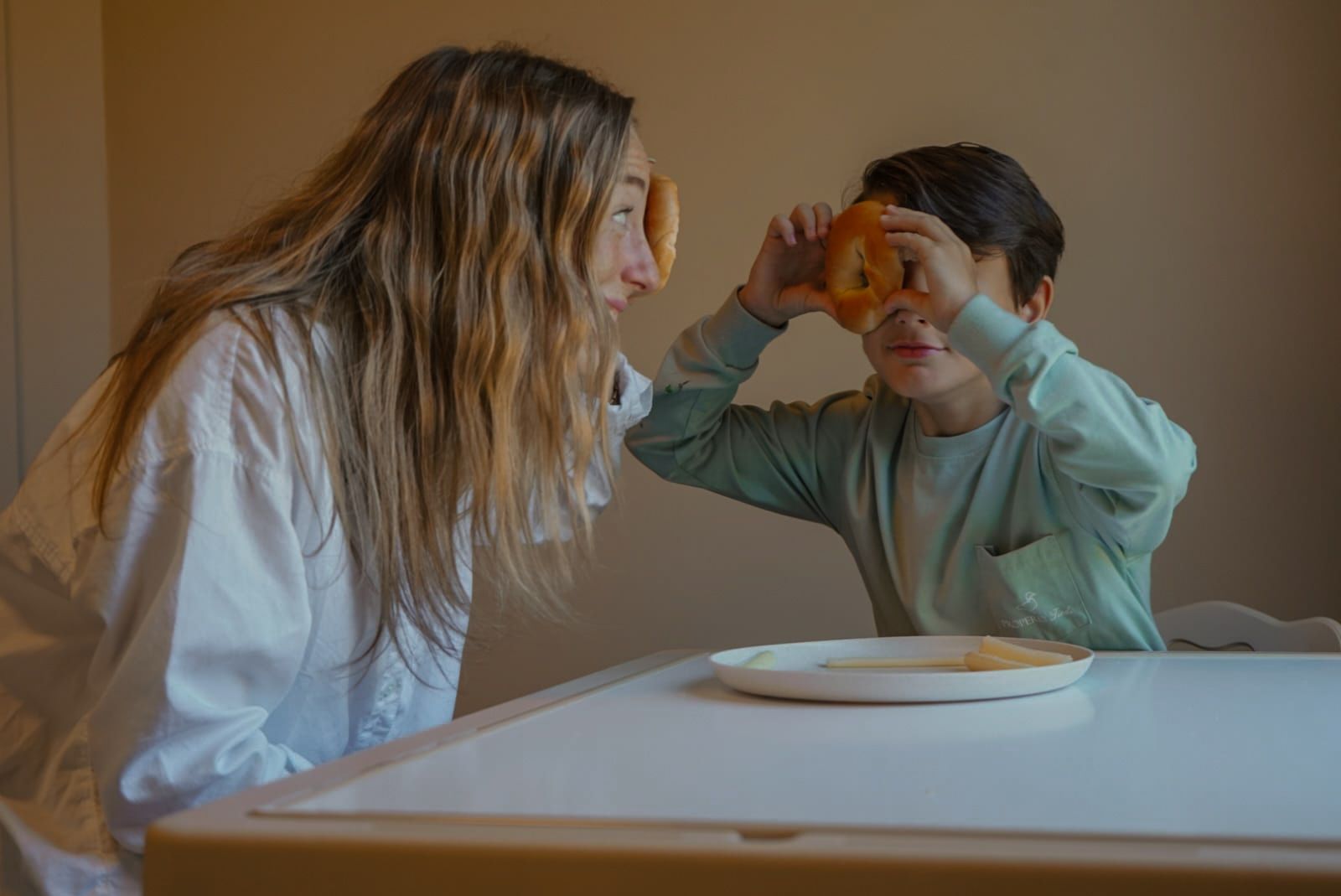
A young boy holds a bagel up to his eyes as a speech therapist smiles at him

Feeding

Feeding therapy supports children in developing a more comfortable and positive relationship with eating while building skills around food exploration, mealtime participation, and eating a variety of foods. Therapy may address oral-motor, sensory, and developmental factors that can make eating challenging.

You may notice:

  • Eating a very limited variety of foods
  • Strong preferences around specific foods, textures, temperatures, or brands
  • Difficulty chewing or managing different textures
  • Difficulty transitioning to new foods
  • Stress or anxiety around mealtimes
  • Mealtimes that regularly become challenging for the child or family
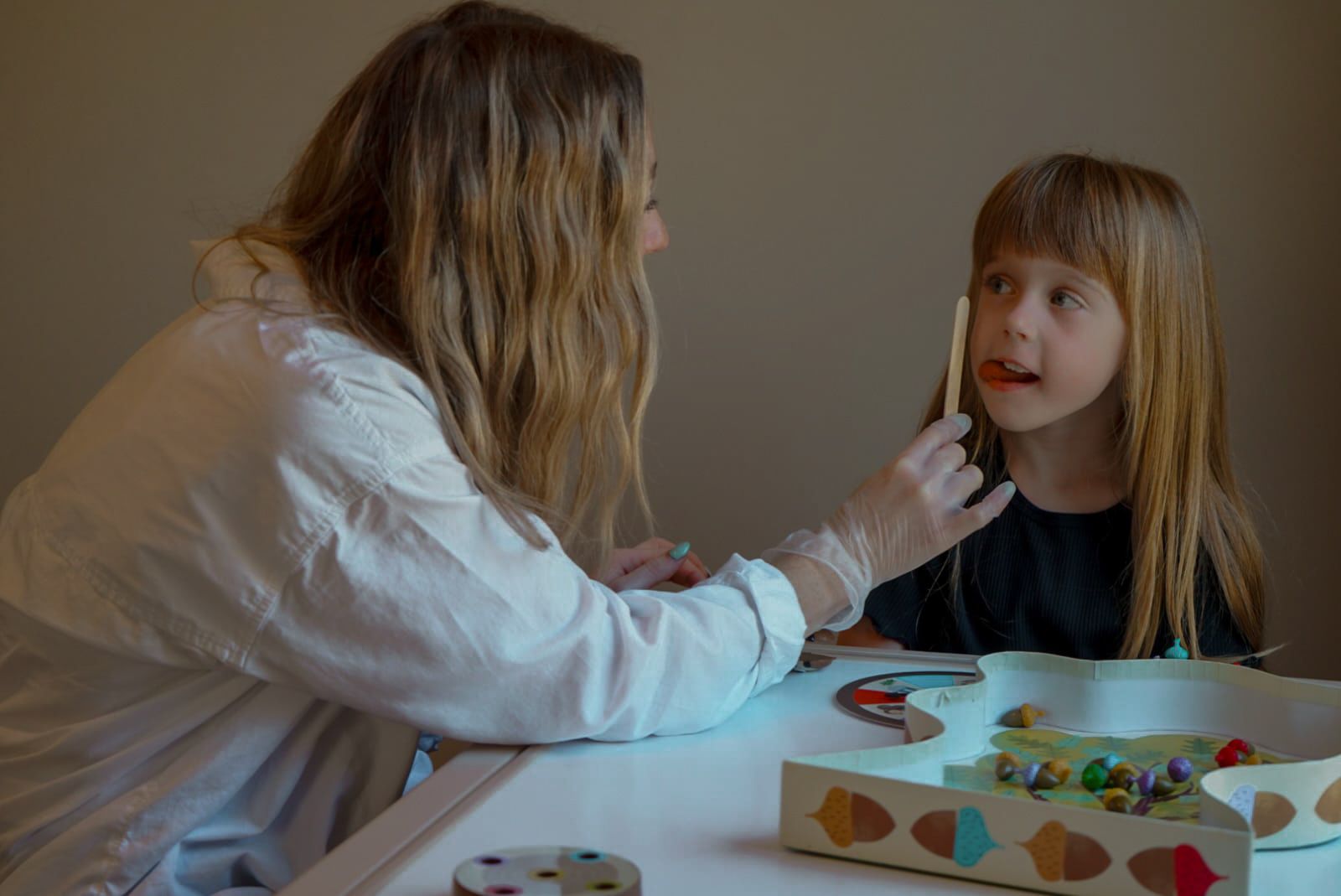
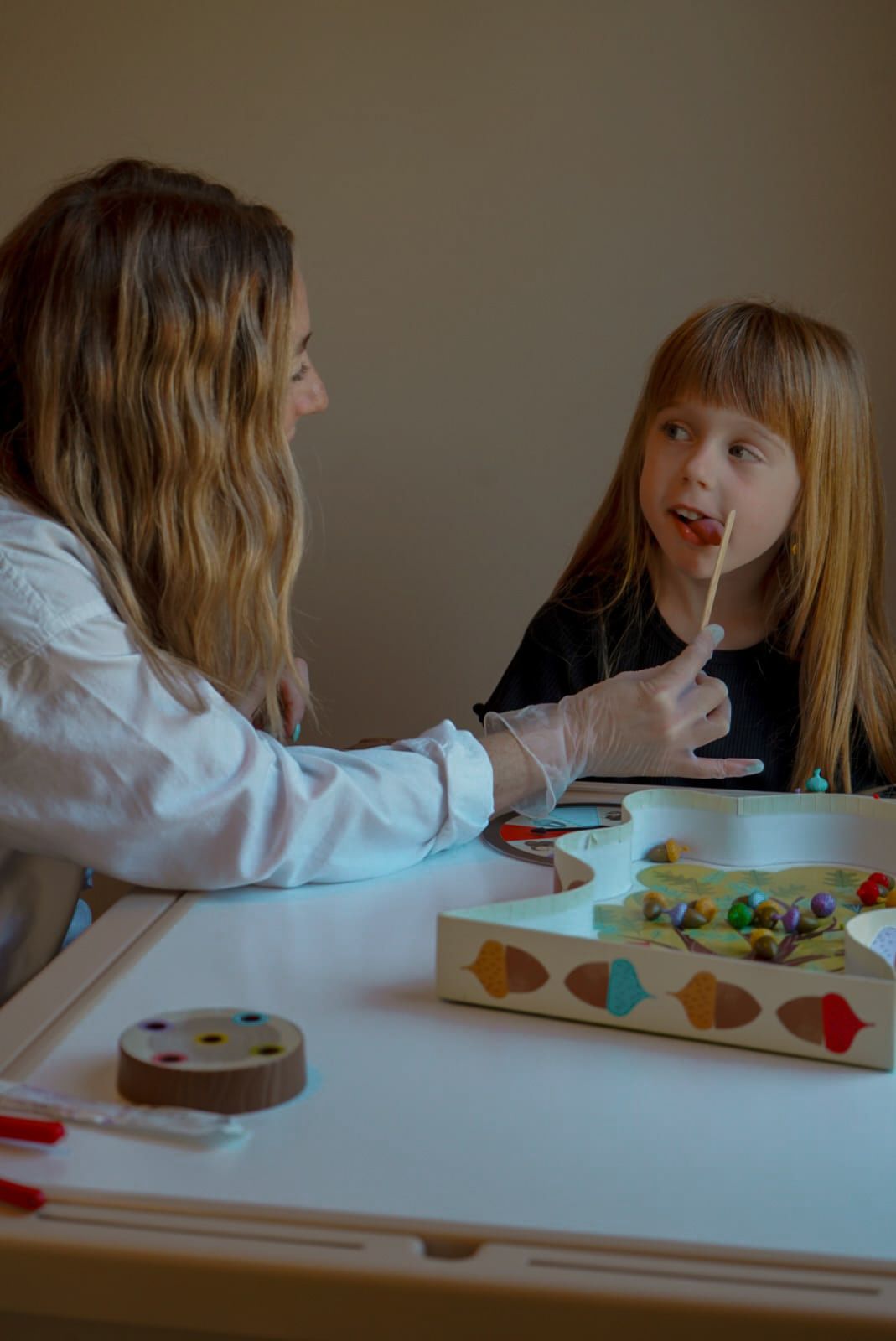
A speech therapist guides a young girl through a tongue exercise with a wooden stick

Orofacial Myofunctional Therapy

Orofacial myofunctional therapy focuses on the muscles and movement patterns of the mouth, face, and jaw, and how they work together for resting posture, breathing, speaking, chewing, and swallowing. An orofacial myofunctional disorder (OMD) involves atypical patterns of movement or resting posture of these muscles. These patterns may affect how a child rests, breathes, speaks, chews, and swallows.

Some signs that a child may benefit from an orofacial myofunctional evaluation include:

  • Open-mouth resting posture and/or mouth breathing
  • Snoring or restless sleep
  • Tongue thrust
  • Frequent illness or congestion
  • Dentition or bite concerns
  • Prolonged thumb, finger, or pacifier habits
  • Persistent drooling
  • Concerns with chewing or swallowing patterns
  • Continued difficulty producing certain speech sounds, even after long-term intervention
Taylor Reed, the speech-language pathologist at Speech Together, smiles with her chin resting on her hand

Meet the SLP

Taylor Reed is a pediatric speech-language pathologist and the founder of Speech Together LLC. She holds a Master of Arts in Speech-Language Pathology from the University of Massachusetts Amherst and has experience supporting children with diverse needs across many areas of communication.

Her clinical specialties include speech sound disorders, language disorders, executive functioning, gestalt language processing, augmentative and alternative communication (AAC), pediatric feeding therapy, and orofacial myofunctional therapy. Taylor has completed specialized training in the SOS Approach to Feeding, LAMP Words for Life, and Meaningful Speech’s approaches to gestalt language processing and AAC, among others.

Taylor believes that meaningful progress begins with building trust and creating a positive therapy experience where children feel comfortable being themselves. She incorporates each child’s interests, strengths, and everyday experiences into therapy to create unique and engaging learning opportunities. By partnering with families and focusing on what matters most to each child, Taylor strives to help children build confidence, develop new skills, and feel empowered to participate in everyday activities and relationships.

Get Started

There are two ways to begin, depending on where your family is in the process.

  • Ready to get started?

    For families who are ready to begin speech therapy. Send your contact details, and Taylor will send you the intake forms to schedule an evaluation.

    Get Started
  • Not sure yet?

    Book a free 15-minute phone consultation. Talk through your questions with Taylor and find out whether speech therapy is right for your child.

    Book a Free Consultation

Currently accepting

  • Blue Cross Blue Shield of Massachusetts
  • Harvard Pilgrim Health Care
  • Tufts Health Plans
  • Cigna Healthcare
  • Private Pay